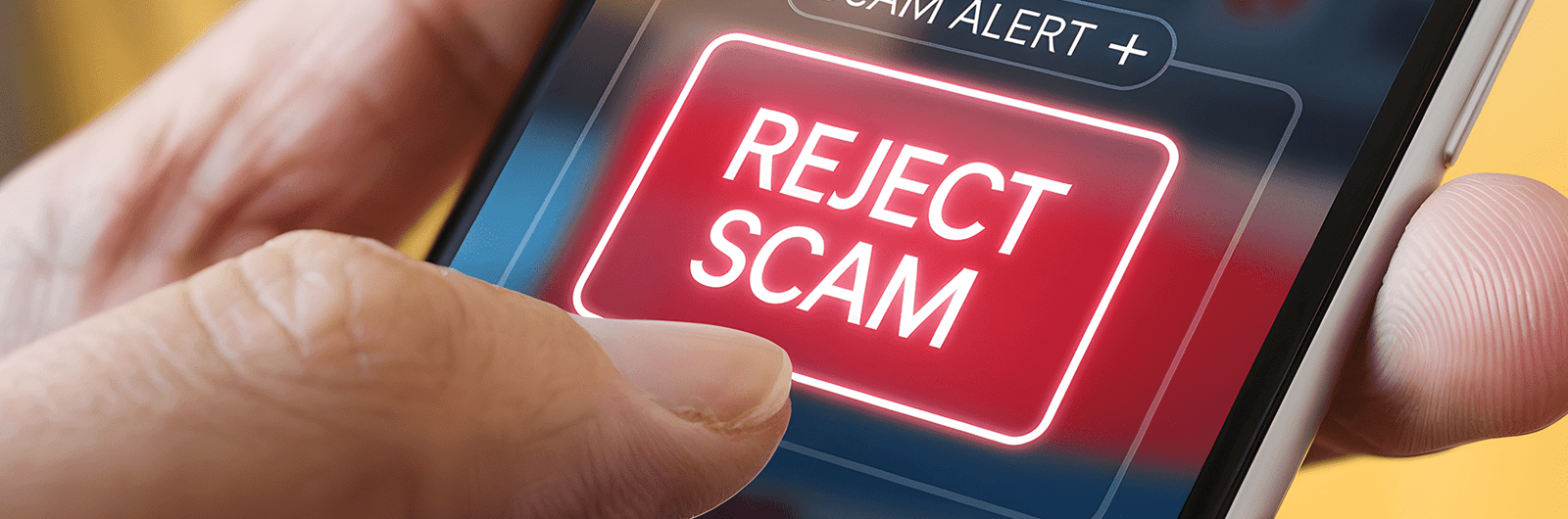
Protect yourself from becoming a victim of fraud in this post-tax filing season.
The deadline for filing your income tax return with the IRS has come and gone…and the scammers are following closely behind.
It may have already started. After April 15, criminals impersonating IRS agents get increasingly more aggressive in their efforts to trick unsuspecting taxpayers into sending them money for “taxes” or “penalties” that they don't actually owe or to coerce them into sharing extremely sensitive personal information. Last year, the IRS reported that more than 20,000 taxpayers fell victim to these scammers and lost millions. You can reduce your risk of becoming a victim by learning to recognize potential tax scams.
Watch for it: “Phishing” emails and “Smishing” texts. “Phishing” emails and “smishing” text messages are designed to steal your personal information. Scammers will send you a message pretending to be from the IRS, demanding urgent updates to important tax forms. They may claim that there’s a refund waiting for you or a tax bill that needs immediate payment. If you click on the link they send you, you’ll end up on a webpage that might look like the IRS website, but it is not. Any information you share — your social security number, birthdate or bank account numbers — can be used by a scammer to empty your accounts, open credit cards in your name or even file an amendment to a phony tax return.
Shut it down: The IRS WILL NEVER contact you via email, text, or social media instant messages (IMs). If you receive an email, hover over or click on the “from” name. It will reveal their actual email address…and if it is not from an address that ends in “.gov,” you have proof that it is a scam. Forward any emails or text messages that claim to be from the IRS to phishing@irs.gov.
Watch for it: Telephone calls stating that you made an error on your tax return and owe money to the IRS. Scammers are increasingly using Artificial Intelligence (AI) to impersonate IRS agents to call taxpayers, claiming they owe taxes and demanding immediate payment using a prepaid debit card, wire transfer or a credit card number. Those who refuse are threatened with arrest, loss of a business or driver's license and even deportation. The robo-callers can manipulate caller ID to make it look like they are calling from an IRS phone number; in some cases, they may even know the last four digits of the taxpayer's Social Security number.
Shut it down: Be aware that when the IRS contacts people about unpaid taxes, they do it by USPS mail, not by phone. Additionally, the IRS doesn’t accept prepaid debit cards or wire transfers for payment, nor will they ask for credit card numbers. Don’t be surprised if you quickly receive a second phone call from the same scammer, claiming to be a representative from the police or department of motor vehicles and repeating the same empty threats. Handle all of these calls the same way: hang up. Then, contact the Federal Trade Commission via the “FTC Complaint Assistant” on FTC.gov. (Add "IRS Telephone Scam" as your message’s subject line.)
Watch for it: A hand-delivered letter saying that you are entitled to an “unclaimed refund.” The IRS is warning taxpayers about a new scam that uses old-school tactics to target senior citizens. Someone who looks like a delivery person knocks on your door and hands you an official-looking envelope that appears to be from the IRS. The letter inside says that you’re entitled to an unclaimed tax refund. Of course, to collect it, you'll just need to send a photo of your driver's license and confirmation of your bank routing numbers, Social Security number, cell phone number and more — all in an email to an “IRS agent.”
Shut it down: These phony letters are designed to lure you into sharing sensitive personal information that will be used for identity theft or tax fraud. Like many scams, the letter will include contact information and a phone number that do not belong to any office at the IRS. Other red flags include awkwardly worded sentences, misspellings, improper punctuation, strange fonts, outdated or wrong tax information and filing deadlines. If you receive a suspicious letter, do not contact the number on the letter. Instead, report the potential scam by email to phishing@irs.gov.
The IRS publishes a list of the “worst of the worst” tax-related scams every year. Review the 2026 IRS Dirty Dozen list, because being informed is always your best protection. If you're not sure whether a communication from the IRS is real, try contacting the agency on your own at 800.829.1040. Remember: if you feel threatened – check it out first before taking any action.
Questions? Contact David Toll, JD, senior associate vice president in Drexel University’s Office of Gift Planning, at 215.895.1882 or giftplanning@drexel.edu.
Contact Us
215.895.2612
giving@drexel.edu
Mail your gift to
Drexel University
P.O. Box 8215
Philadelphia, PA 19101-9684
Drexel University Tax ID (EIN): 23‐1352630